
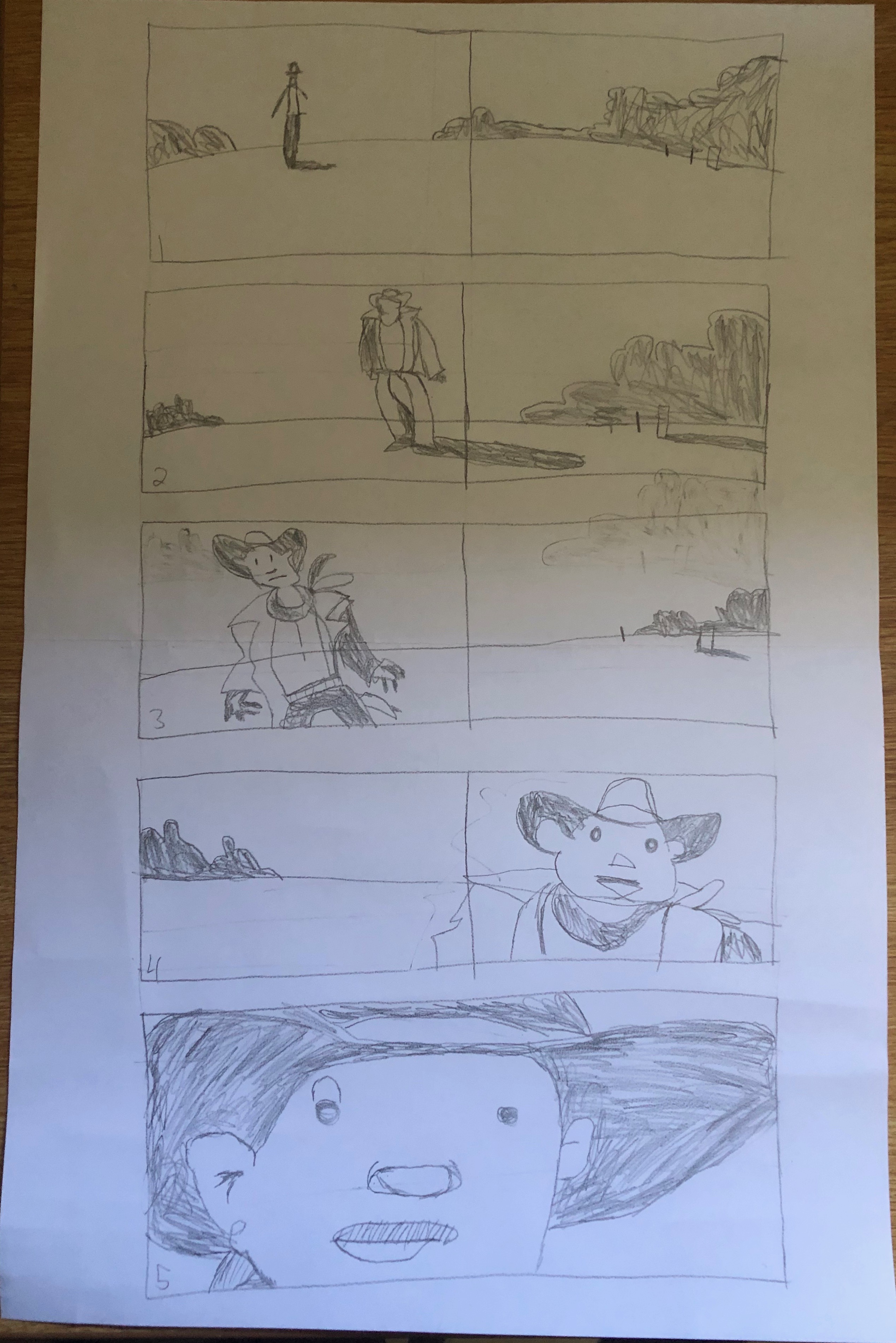
If you’ve ever seen someone make drawings in a specific order that makes sense, they’re most likely doing story-boarding. Story-boarding is a type of prototype in which you draw up a bunch of sketches based on a story you want to tell on a comic book or animation.
Each one of the sketches represents specific transitions of frames that the creator wants the story to look, making the illusion of smooth animation. Storyboarding is used in many works of art, whether it be a graphic novel, a comic book, a manga, or even many forms of animation like cartoons and anime.
This practice of prototyping serves as the skeleton for the story being told before the whole thing is shown off, just as a way of getting you through the process so you can knock it out in one go. In many cases, storyboarding makes the process of making an illustration or animation of the story somewhat easier since you’re laying out the blueprints for what it needs and what it should look like.
According to “What Is A Storyboard And Why Do You Need One?”, some helpful tips to keep in mind when making a storyboard include:
- Show, don’t tell: Using illustrations as opposed to dialogue.
- Being cinematic: Doing something unique that no one else does.
- Making sure that it’s logical and coherent: Having it make sense and be consistent throughout.
- Picking a theme: Knowing where the story goes and what’s relevant to it.
All these tips in mind help to make a skeleton of a project that the audience can understand and be satisfied with its consistency. Whether it’s through animation, illustration, or filmmaking, storyboarding is essential for completing projects in a miniscule amount of time.
 Bryan's Graphic Journey